
The unit list drives the conversation
A dealer or fleet move can involve one vehicle, several units, or repeat transport between familiar locations. The first useful detail is a clean unit list: what is moving, where each unit is, what condition it is in, and where it needs to go.
For a single dealer transfer, that may be a stock number, year, make, model, and pickup contact. For fleet work, it may be a spreadsheet or plain list with unit IDs, locations, contacts, and timing notes.
The clearer the unit list, the easier it is to plan pickup order, contact points, and delivery expectations.
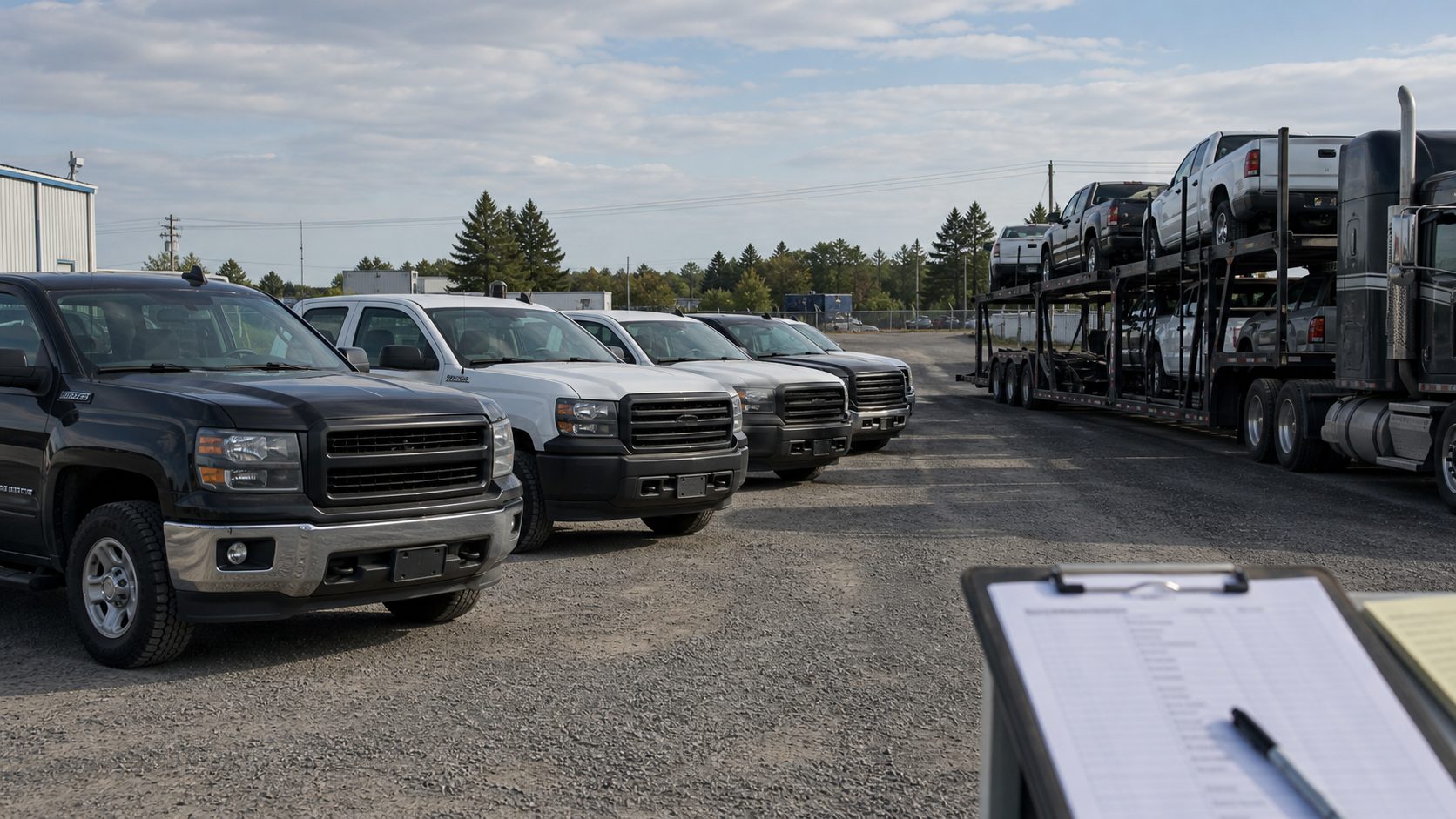
Pickup contacts and hours matter
Dealer lots, storage compounds, fleet yards, and auctions often have rules around release, keys, pickup hours, and where a carrier can load. A driver may need a specific contact, gate instruction, stock number, or release confirmation before the vehicle can be moved.
The pickup contact should know the vehicle is leaving, where it is parked, whether keys are available, and whether there are yard restrictions. That saves time and reduces confusion when the driver arrives.
Confirm stock number, keys, release, pickup hours, and the staff member who can release the unit.
Confirm the unit ID, staging location, gate access, and whether multiple units need to leave together.
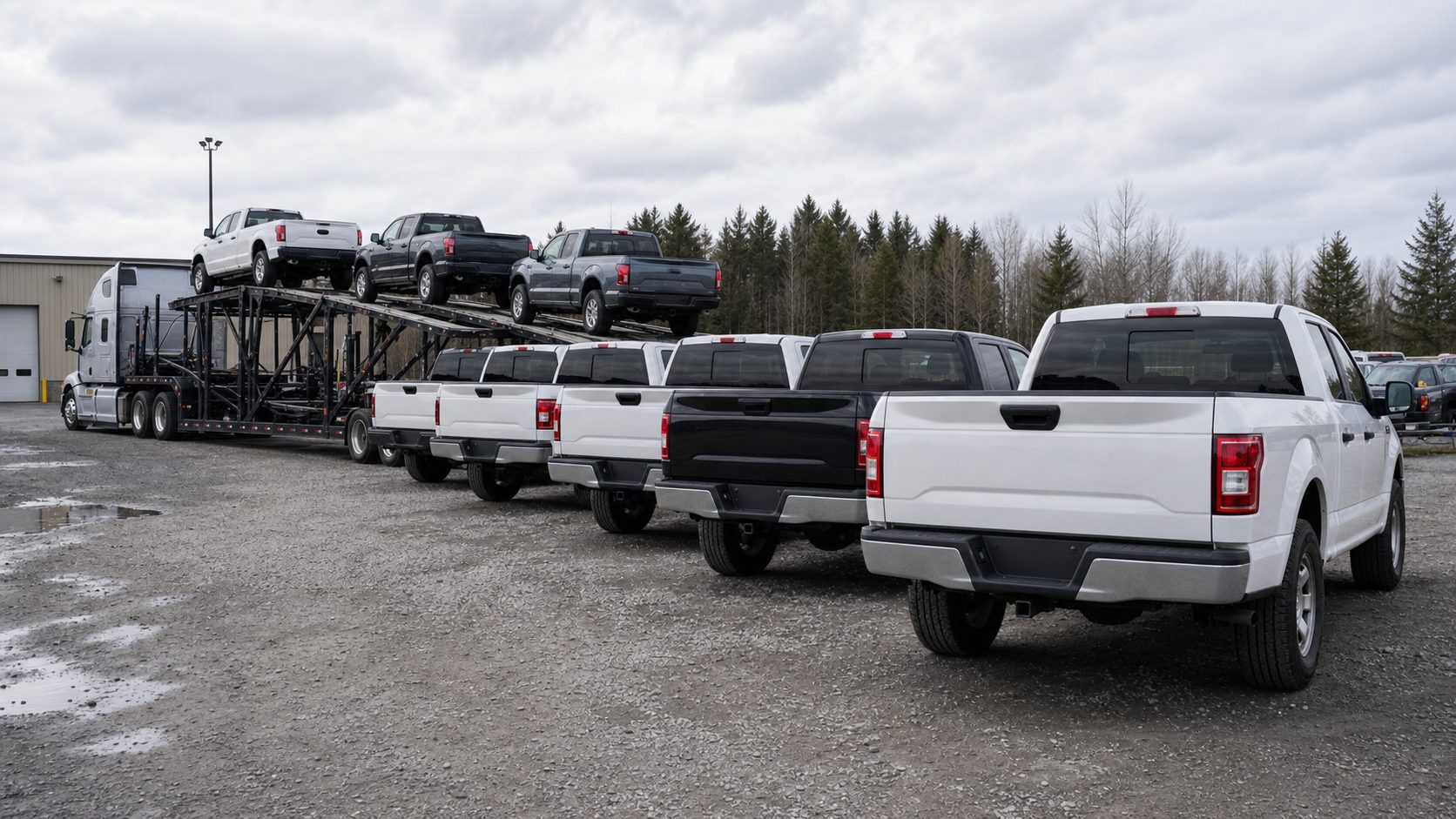
Condition still matters for business moves
Dealer and fleet vehicles are often assumed to be straightforward runners, but condition still matters. A unit may have a dead battery, missing key, low tire, body damage, expired plate, or modification that affects loading.
If a vehicle is non-running, oversized, lifted, low, damaged, or loaded with equipment, include that detail early. Business transport still depends on practical loading conditions.
Delivery should be just as clear as pickup
The delivery side should identify who receives the vehicle, where it can be unloaded, and whether timing matters. Customer delivery, dealer transfer, auction release, and fleet relocation each have different expectations.
If vehicles are going to more than one destination, separate the delivery details by unit. Clear delivery information helps avoid the wrong vehicle arriving at the wrong place or the right vehicle arriving with nobody ready to receive it.
For repeat work, it can help to standardize the details BEMAC receives. A familiar route is easier to coordinate when each request uses the same kind of unit list, contact information, release status, and delivery instructions.
- Unit list or stock numbers
- Pickup contact and hours
- Keys and release status
- Vehicle condition notes
- Delivery contact and unloading location
Why business moves still need human context
Dealer and fleet work can look orderly on paper, but the practical details still live with people on the ground. Someone knows which vehicle is blocked in. Someone knows which unit has a dead battery. Someone knows which gate should be used or which customer expects a delivery call.
That human context is what turns a unit list into a workable transport plan. The cleaner those contact points are, the less time gets lost at the lot.
For regular dealer or fleet moves, a consistent unit-list format can make each future transport request easier to review.
How to keep repeat moves from becoming messy
The advantage of dealer and fleet transport is that the work can become repeatable. The risk is assuming repeatable means automatic. A familiar lane can still run into problems if the unit list changes, a pickup contact is off that day, keys are not where expected, or delivery instructions are incomplete.
For repeat work, it helps to build a simple rhythm: send the unit list, confirm pickup contact, confirm keys and release, note condition issues, and separate delivery details by destination. That rhythm keeps the request practical without making every move feel like a new project.
When the same information arrives in the same order each time, BEMAC can review the move faster and ask better follow-up questions when something is different.