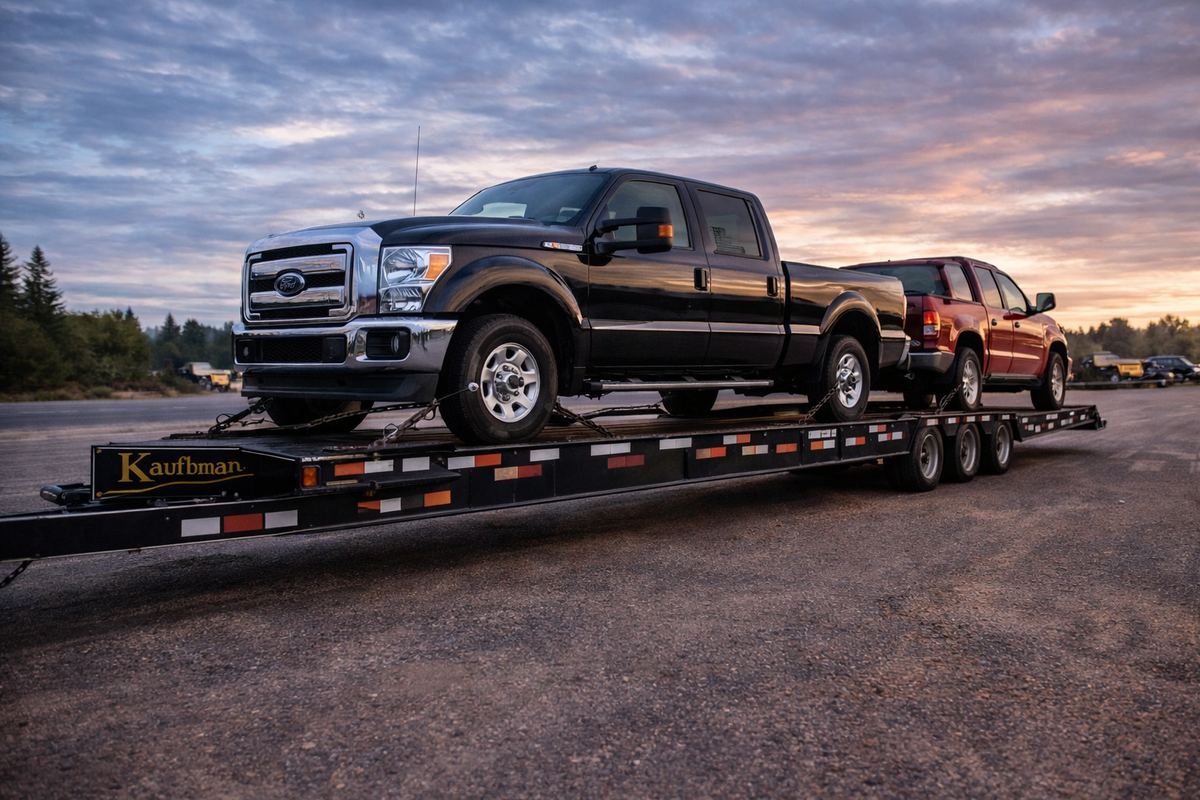
Vehicle type matters
Service vans, pickups, utility bodies, fleet SUVs, and light commercial units can vary in height, weight, length, and loading needs.
The quote request should identify the body style and any equipment attached to the vehicle.

Business contents and racks should be mentioned
Ladder racks, toolboxes, shelving, cargo, parts, or mounted equipment may affect weight and expectations. Do not assume they are irrelevant.
If the vehicle is empty, say empty. If it carries tools or parts, describe that clearly.
High roof, shelving inside, ladder rack, runs and drives.
Toolbox mounted, empty bed, keys at branch office.

Branch contacts make delivery easier
Commercial moves may involve branch managers, fleet coordinators, repair shops, or jobsite contacts. The receiving person should know when the vehicle is arriving and where it should be parked.
A business delivery still needs practical unloading space.
What to send for light commercial transport
A clean request should describe the vehicle, its equipment, condition, contacts, and business timing.
- Vehicle type and body style
- Racks, toolboxes, or cargo
- Running condition
- Pickup branch contact
- Delivery contact
- Timing or business deadline